Why Should You Work with the Manufacturer in Energy Management?
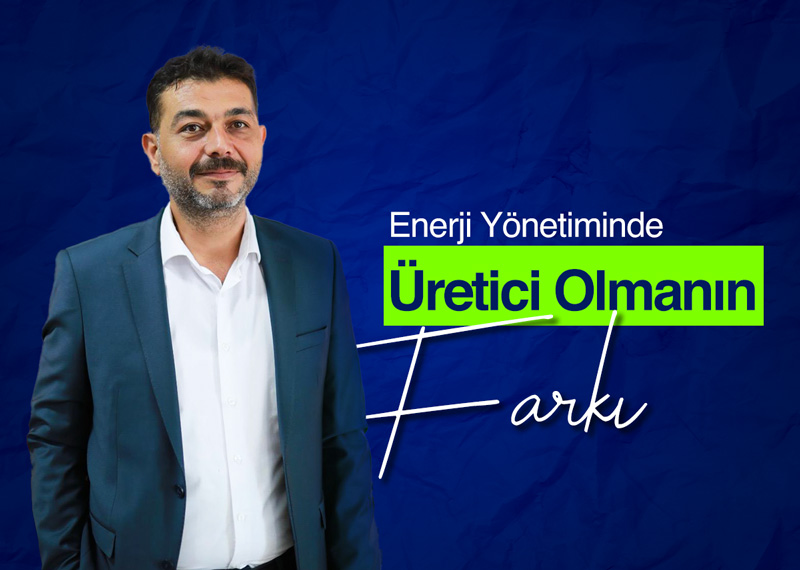
Energy management is no longer just about controlling electricity bills. Today, energy management means ensuring production continuity, extending equipment lifespan, managing operating costs, and determining how prepared a facility is for the future.
Energy management is no longer just about controlling electricity bills. Today, energy management means ensuring production continuity, extending equipment lifespan, managing operating costs, and determining how prepared a facility is for the future. Especially in industrial facilities, every decision made regarding the energy infrastructure directly impacts operational efficiency.
Therefore, the key question for businesses today is: Is it more important to purchase an energy management solution, or to have the manufacturer’s expertise behind that solution?
My view is clear. For sustainable success in energy management, it takes more than just a product; it requires engineering expertise, manufacturing capability, field experience, and a long-term technical approach. This is precisely why working with the manufacturer has become a critical advantage for many businesses.
Why is the right solution critical in energy management?
In industrial facilities, the energy system is not merely an infrastructure that provides electricity distribution. It is also a strategic area that directly impacts production quality, machine safety, and cost structure. Reactive power issues, harmonic distortion, voltage fluctuations, compensation instability, and unplanned downtime often arise when energy management is poorly designed.
At this point, the most common mistake businesses make is viewing energy management solely as an equipment investment. However, the real need is for a solution architecture that operates effectively on-site, understands the facility’s load characteristics, and can quickly adapt to changing requirements.
Today’s facility structures feature faster, more precise, and more intense load profiles. This structure causes traditional systems to fall short in many areas. Especially during load changes requiring millisecond-level response times, conventional approaches may struggle to meet the facility’s expectations. Therefore, in energy management, the approach of the manufacturer developing the solution is just as important as the solution itself.
Why is working with a manufacturer advantageous?
The key difference in working with a manufacturer in the field of energy management is that the solution is tailored to actual needs rather than simply being based on a catalog. The manufacturer’s role ensures that design, engineering, testing, product development, and technical support processes are managed from a single perspective.
The advantages this approach offers to businesses are clear:
· Flexibility to develop facility-specific solutions
· Selection of the right product based on load profiles
· Faster technical evaluation and revision capabilities
· An engineering approach focused on system reliability
· Long-term continuity of service and technical support
There is a significant difference between standard product supply and manufacturer-supported solutions. In one, you simply purchase a product. In the other, you receive not only the product but also knowledge, experience, engineering expertise, and a sustainable partnership for solutions.
In energy management, this difference becomes particularly pronounced for heavy industry, manufacturing facilities, process industries, and businesses with high power requirements. This is because the margin for error is minimal in these facilities. A poorly designed solution results in losses not only in energy bills but also in production quality, maintenance costs, and equipment safety.
What is the core approach that sets Aha Teknoloji apart?
At Aha Teknoloji, our perspective is not to view energy management merely as a sales opportunity. We approach this field within the framework of engineering, manufacturing discipline, on-site realities, and long-term operational efficiency.
Our primary goal in developing solutions is not merely to meet businesses’ current needs; it is also to prepare them for the energy infrastructure of the future. For this reason, in compensation systems, next-generation compensation solutions, Static Var Generator (SVG), Active Harmonic Filter (AHF), and energy quality-focused applications, we always prioritize the actual on-site problem.
As a manufacturer, the key factors that set us apart are as follows:
1. Engineering-focused approach
Every facility has a unique load profile, production method, and energy requirement. Therefore, no two solutions can be viewed through the same lens. We evaluate systems not only based on technical specifications but also on their actual performance in the field.
2. Local manufacturing capability
Local manufacturing is not merely a production model. It also means speed, accessibility, and sustainable technical support. Mastering product development processes enables us to turn feedback from the field into solutions much more quickly.
3. A holistic view of power quality
Compensation, harmonic filtering, and reactive power management are not separate topics. True efficiency is achieved by evaluating these areas together. That is why we base our solution approach not on a single product, but on the performance of the entire system.
4. A Long-Term Operational Perspective
The success of a solution is measured not only at the time of commissioning but also by its performance over the years. For this reason, maintenance requirements, system stability, scalability, and total cost of ownership are our fundamental evaluation criteria.
Why is trust just as important as technical expertise in energy management?
Energy management decisions are often shaped by a joint decision between the technical team and the management team. On one hand, there is system security; on the other, there is return on investment. Solutions that satisfy both of these aspects simultaneously are typically developed by companies with a robust manufacturing infrastructure.
Because trust isn’t built solely on the product’s functionality. Trust is built through a structure that can stand behind the solution, provide technical guidance when needed, and support the business’s growth.
At Aha Teknoloji, we adopt an approach that considers not only our customers’ current technical needs but also the risks they may face in the future. This approach transforms us from a mere product provider into a true solution partner.
How can sustainable success be achieved in energy management?
For sustainable success, energy management must be built on three pillars:
· proper engineering,
· proper product architecture,
· proper manufacturer support.
If any one of these three pillars is missing, systems that appear to function in the short term may generate additional costs for the business in the long term. Therefore, when making investments in energy management, it is essential to evaluate not only the initial cost but also the system’s performance over the years.
At this point in time, businesses need more than just managing energy-consuming systems; they must also create solutions that maintain energy quality, support production continuity, and adapt to growth. This is only possible through companies that combine production capacity with engineering expertise.
Conclusion
What truly makes a difference in energy management isn’t just which product you use. What truly makes the difference is the engineering philosophy behind that product and the manufacturer’s vision that supports it.
At Aha Teknoloji, our goal is to provide businesses with solutions in the field of energy management that address not only today’s needs but also those of the future. With our manufacturer identity, engineering approach, and field experience, we work to make energy management more efficient, sustainable, and reliable.
Because, in our view, energy management is not merely a technical field; it is also a strategic element that determines a business’s competitive strength.
Serkan ANBAR
CEO, Aha Teknoloji
