Why Do Panels Overheat in Factories? 6 Critical Reasons from an Energy Quality Perspective
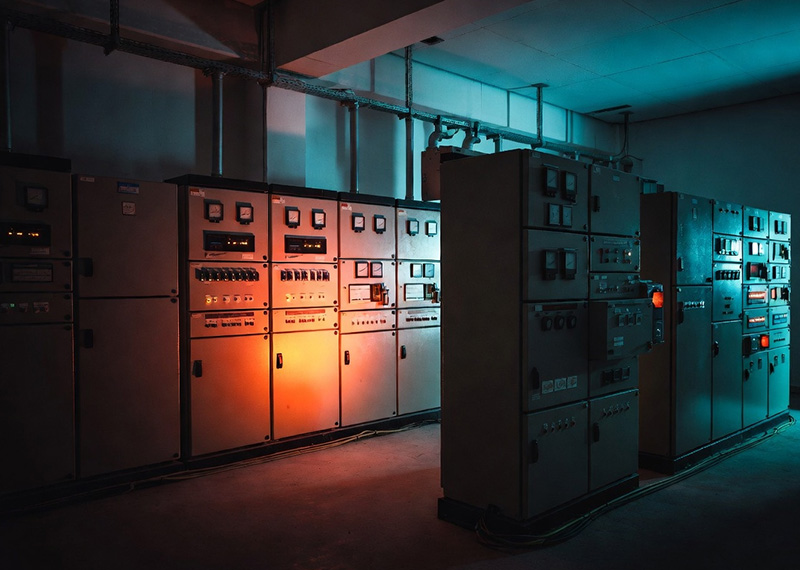
Electrical panels in production facilities, which are the lifeblood of industry, are extremely critical for the continuity of operations.
Electrical panels in production facilities, which are the lifeblood of industry, are extremely critical for the continuity of operations. Therefore, unusual heating in panels signals potential future production stoppages and negative impacts on equipment health. In such cases, the common mistake is to attribute the cause of heating to a single factor. However, the real cause may be a combination of many factors, such as the load profile of the facility, the quality of connections made during panel installation, harmonics, environmental conditions, and compensation behavior.
As the Aha Technology team, we evaluate panel heating not only through physical checks but also in a broader context, together with power quality and reactive power management. This perspective brings us closer to the real cause of the problem. This is because while some sources of heating problems are visible, some causes may involve invisible parameters. Therefore, it may not be possible to understand this without taking measurements.
In this article, we will examine the six critical causes of heating problems in electrical panels and the correct approaches that should be taken to solve them.
1) Loose Connections and Increased Contact Resistance
In cases of panel heating, the most common situation encountered is increased contact resistance at connection points. Both improper terminal applications and loose clamps can cause localized heating within the panel. A thermal camera inspection will help to clearly identify the situation.
What needs to be done:
· Perform periodic torque checks
· Make clamp, busbar, and terminal connections in accordance with standards
· Regular monitoring with a thermal camera is required for temperature testing.
This first step is a fundamental requirement for the health of the panel. If heating persists despite everything being correct, you should evaluate our other topics.
2) Cable Cross-Section, Busbar Sizing, and Current Density
Changes such as new line additions and capacity increases may occur in the facility's planning structure. As a result of these changes, the current passing through the panel may increase. Since the installation is made according to the initial plan, the cable cross-section and busbar sizing may remain limited under the new conditions. As current density increases, losses in the panel increase and become an additional cause of heating.
What needs to be done:
· Re-analyze existing and anticipated loads.
· Check the phase balance and current distribution within the panel.
· Plan cable and busbar replacement as needed.
The critical importance here is not only the total power. The operating characteristics of the load are an important issue that must be considered. The panel's thermal behavior can be particularly affected by rapidly changing loads.
3) Phase Imbalance and Neutral Line Loading
In systems with a three-phase structure, imbalance between phases can cause an increase in current in some phases and, consequently, overheating. In some cases, higher than expected current may be observed in the neutral line. This situation can manifest itself as overheating in cables and bars, and consequently in the panel.
What needs to be done:
· Regular measurement of phase currents
· Distributing unbalanced loads evenly across the phases as much as possible
· Monitoring the neutral current and checking the suitability of the cable cross-section.
Unbalanced loads in the phases indicate a problem that needs to be resolved. The continuation of these imbalances or an increase in non-linear loads indicates harmonics.
4) Harmonics (Invisible Heat Source)
When it comes to panel heating issues, cables and connections are the first things that come to mind. In today's production facilities, the increase in non-linear loads such as inverters, drivers, and UPS systems makes the effects of harmonics more visible. Effects such as extra heating in components and additional losses in the network can be observed.
Harmonics, which appear as an invisible risk, create an accumulating effect on the system before producing observable faults, causing:
· Heating in cables and busbars
· Unexpected shutdowns
· Loss of efficiency in equipment.
What needs to be done:
· Analyze harmonic levels in the system using a power quality analyzer
· Determine the most suitable energy quality solution based on the facility's load profile
· Use an AHF (Active Harmonic Filter) solution as needed.
5) Compensation Panel Behavior: Frequent Switching and Unstable Operation
In power quality management, the compensation panel is a system that is constantly in operation to manage reactive power. However, if the facility's load profile is fluctuating or the compensation system is not properly configured according to the facility's load profile, more frequent switching may occur. In such a case, additional stress may be placed on the components from a thermal perspective.
In compensation systems where instability and heating problems are observed, the condition of the contactors and capacitors, the control strategy, and the reactive power behavior in the facility should be considered together. Another factor affecting the system is harmonics. The presence of harmonics indicates that we should not perform compensation analysis independently of power quality.
The following actions should be taken:
· Monitoring the frequency of steps and switching in the system
· Checking the condition of contactors and capacitors
· Re-evaluating the system design based on measurements.
6) Environmental Conditions, Ventilation, and Panel Internal Thermal Design
In some cases, the heating problem experienced in compensation panels is seen to stem not from an electrical issue, but rather from a failure to provide the necessary thermal conditions. Factors such as panel interior layout obstructing airflow, inadequate panel ventilation, clogged filters, or high ambient temperature in the panel's location can contribute to increased heating.
Required actions:
· Regular maintenance of panel ventilation
· Arranging the interior layout of the panel in a way that does not disrupt airflow
· Conducting thermal measurements to identify areas for improvement.
This section requires evaluating both field conditions and panel design together.
The Right Approach: Measurement → Analysis → The Right Solution
Although the causes vary from facility to facility, panel heating is a result that we encounter. We can ensure the most accurate approach to the issue by conducting measurement-based analysis using a checklist. So, what should our roadmap look like?
1. Hot spots are identified using a thermal camera
2. Cables, bars, and connection points are checked
3. Neutral current and phase balance measurements are taken
4. Power quality analysis is performed along with harmonics
5. The overall behavior of compensation is observed
6. Environmental and ventilation conditions are evaluated
With years of experience, Aha Technology approaches the panel heating problems it frequently encounters in the field not with a temporary solution, but with the goal of permanent improvement through accurate measurement and analysis evaluation.
Conclusion
As mentioned in our article, panel heating problems experienced in facilities are related to many issues, from phase imbalances to harmonics, loose connection points, and compensation behavior. Instead of creating temporary solutions, it is necessary to seek permanent solutions based on analysis and measurement. Work carried out from an energy quality perspective helps maintain continuity by reducing the risk of failure for the business.
You can contact us for the most accurate solution.
