What is SiC Module Technology? A Next-Generation Solution for Energy Efficiency
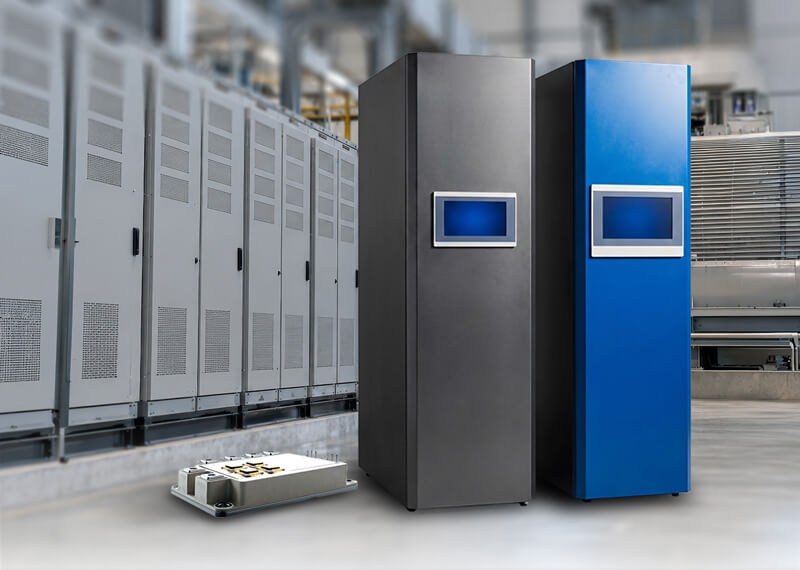
As energy costs rise year on year, one of the most overlooked items in facilities is the internal losses of power electronics devices.
As energy costs rise year on year, one of the most overlooked items in facilities is the internal losses of power electronics devices. Compensation systems, harmonic filters and static var generators dissipate a certain amount of energy as heat whilst in operation. This loss may seem small, but in a facility operating 24/7, it adds up to a significant item on the annual bill.
At Aha Teknoloji, we now utilise SiC Module (Silicon Carbide) technology in our Varmatik SVG and Harmonikmatik AHF solutions. In this article, we explain what SiC Module technology is, how it differs from conventional IGBT modules, and the savings it delivers to your business, backed by figures.
What is a SiC Module?
A SiC module is a power switching module manufactured from silicon carbide (SiC) semiconductor material. This technology, which replaces the silicon-based IGBT modules used in traditional power electronics devices, performs the same switching function with significantly lower losses.
Silicon carbide is a semiconductor with a wider bandgap than silicon. This property enables the module to operate at higher temperatures, higher frequencies and with lower losses. Consequently, a device performing the same task consumes less energy and generates less heat when using a SiC module.
Differences Between SiC Modules and Conventional IGBTs
Conventional IGBT modules have served as the backbone of power electronics for decades. However, the physical limitations of silicon pose a barrier to further efficiency gains. The SiC module is a new-generation alternative that overcomes this limitation.
The key differences between the two technologies are as follows:
· Power losses: Operating at the same switching frequency, the SiC Module reduces total power losses by between 60 per cent and 80 per cent compared to conventional IGBT modules.
· Efficiency: Whilst conventional IGBT modules typically offer inverter efficiency in the range of 95 per cent to 97 per cent, the SiC Module raises this figure to between 98.5 per cent and 99.5 per cent.
· Thermal conductivity: Silicon carbide has approximately three times the thermal conductivity of conventional silicon. Heat generated is transferred from the chip to the heat sink much more rapidly.
· Operating temperature: Thanks to improved thermal management, the module operates at a lower temperature and with greater stability.
What Are the Advantages of SiC Modules?
The advantages of SiC module technology can be summarised under three headings.
Lower Thermal Loss
In power electronics devices, part of the energy is converted into heat during conduction, switching and diode recovery processes. SiC modules significantly reduce all three of these loss factors. As losses decrease, so does the heat generated, thereby reducing the need for cooling. This directly impacts system efficiency and cooling requirements.
Higher Efficiency
The efficiency gains are particularly evident at light and medium loads. As the majority of facilities do not operate at full load throughout the day, the SiC Module’s superior performance under partial loads becomes even more valuable in practice.
Longer Lifespan and Stability
Lower operating temperatures extend the lifespan of semiconductor components. Furthermore, improved thermal management enhances system stability and reduces the need for maintenance.
A Real-Life Example: Annual Savings with a 100 kVar SVG
Let’s look at an example to put the figures into perspective. A 100 kVar SVG module corresponds to a compensation current of approximately 144 A on a 400 V mains supply.
In this power class, hourly active energy consumption at full load is approximately 2.4 kWh in a conventional IGBT-based solution, whereas it drops to between 0.9 and 1.0 kWh in a Varmatik SVG module featuring SiC Module technology. In other words, the loss rate falls from approximately 2.4 per cent of the nominal capacity to below 1 per cent.
This difference of 1.4 kWh translates into an annual saving of approximately 12,096 kWh in a facility operating continuously throughout the day. Calculated at current energy prices, this equates to approximately 1,490 USD per year.
(Based on a unit price of 6 TL per kWh)
This difference alone ensures that the investment pays for itself in as little as one year. Switching to SiC modules is not merely a technological upgrade, but also an investment that pays for itself rapidly.
In Which Products Is the SiC Module Used?
Aha Teknoloji offers SiC Module technology in two main product groups.
Varmatik SVG
The Varmatik SVG is a Static Var Generator (SVG) developed for reactive power compensation. The Varmatik SVG, featuring SiC Module technology, maintains grid stability with a rapid dynamic response whilst minimising operating costs thanks to its low losses.
Harmonikmatik AHF
Harmonikmatik AHF is an active harmonic filter that actively filters out harmonic distortions. The AHF, featuring SiC Module technology, eliminates harmonics with high switching performance whilst also offering efficiency benefits.
Frequently Asked Questions
What is a SiC module?
A SiC module is a power switching module manufactured from silicon carbide semiconductor material. Compared to conventional IGBT modules, it performs the same function with significantly lower energy losses.
What is the difference between a SiC Module and an IGBT?
Compared to an IGBT, a SiC Module reduces total power losses by between 60 per cent and 80 per cent, increases inverter efficiency to levels of 98.5 per cent to 99.5 per cent, and offers approximately three times higher thermal conductivity.
Does the SiC Module save energy?
Yes. In a 100 kVar SVG module, hourly consumption at full load drops from 2.4 kWh to between 0.9 and 1.0 kWh. This difference results in an annual saving of approximately 12,096 kWh, equivalent to around 1,490 USD.
(Based on a unit price of 6 TL per kWh)
When does the investment in the SiC Module pay for itself?
In a facility operating 24/7, the investment in the SiC Module pays for itself in as little as approximately one year thanks to the energy savings.
In which devices is the SiC Module used?
SiC Module technology is used in Aha Teknoloji’s Varmatik SVG (Static Var Generator) and Harmonikmatik AHF (Active Harmonic Filter) solutions.
Conclusion
Energy efficiency is no longer merely a matter of environmental awareness; it is a cost factor that directly affects competitiveness. SiC Module technology radically reduces the power consumption of power quality devices, thereby lowering operating costs and extending system lifespan.
At Aha Teknoloji, we have completed the transition to SiC Module technology in our Varmatik SVG and Harmonikmatik AHF solutions. If you too wish to reduce your facility’s energy costs and safeguard power quality with next-generation technology, please get in touch with our team of experts.
