Stability in Power Factor Correction: How to Manage the Demanding Loads of Heavy Industry?
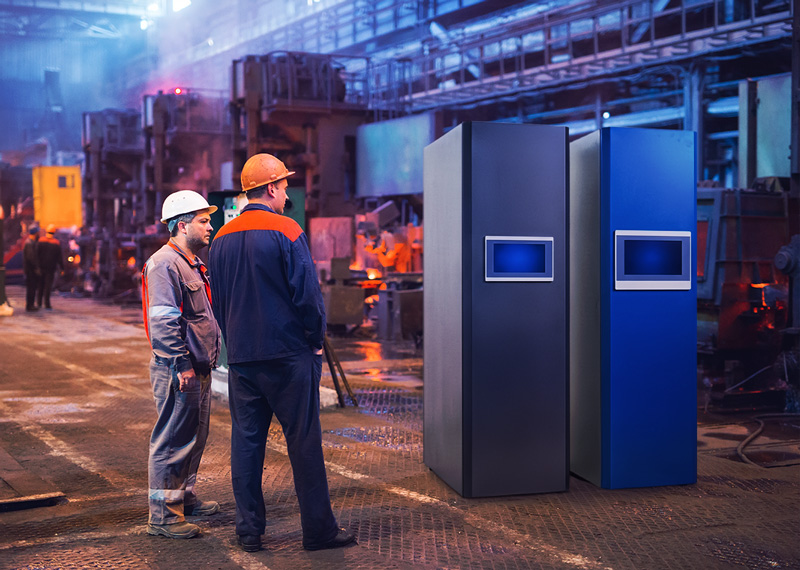
When we hear the term “heavy industry” in the industrial sector, what typically comes to mind are massive machines and high-tonnage production.
When we hear the term “heavy industry” in the industrial sector, what typically comes to mind are massive machines and high-tonnage production. However, another critical aspect that truly deserves this label is the challenging energy profile. From paper mills to mining sites, and from steel plants to cement factories, the heart of operational continuity in every facility lies in energy profile management. The energy loads of such heavy industry facilities have an extremely aggressive nature. As a result, traditional methods often fall short in managing this aggressive structure.
How can we manage this challenging and dynamic load structure of heavy industry while ensuring stability?
The “Time” Problem Caused by Dynamic Loads
The most well-known characteristic of heavy industry is the massive motors that engage and disengage within milliseconds. In such facilities, conventional step-by-step compensation systems are too slow to respond to the plant’s needs. By the time the system meets the load’s demand—seconds later—it is already too late. As a result, either excessive compensation is provided, or sensitive control cards fail due to voltage fluctuations.
In such situations, smart systems capable of responding to the facility’s needs within milliseconds—specifically SVG (Static Var Generator) devices—become not just an option, but a necessity.
Dealing with Dust, Heat, and Harsh Environmental Conditions
The grueling impact of heavy industry is not limited to the electrical system. The physical conditions are also extremely demanding. Areas with high temperatures and excessively dusty work environments cause the lifespan of capacitors and contactors in conventional compensation panels to diminish rapidly. Even under these extreme conditions, next-generation compensation systems continue to operate without any loss of performance. The most important point to remember is that every hour lost due to a failure can cost tens of thousands of dollars. These costs demonstrate that system stability directly translates to profitability.
Harmonic Distortion and Equipment Health
Given the nature of the equipment used in heavy industry and the facility’s load profile, harmonic distortion emerges as an inevitable byproduct. This harmonic distortion not only damages the power grid but also causes excessive heating in transformers and shortens the lifespan of motors. At Aha Teknoloji, our new-generation smart compensation systems—manufactured domestically to the highest standards—enable dynamic power management while eliminating harmonic distortion, the system’s silent enemy, through our AHF (Active Harmonic Filter) device.
Conclusion: Investment or Prevention?
A situation we clearly encounter in the projects we deliver as Aha Teknoloji, particularly in the heavy industry sector: Proper engineering and smart systems not only prevent reactive power penalties; they also enhance the factory’s “energy resilience.” With our next-generation solutions, which we implement at the cost of traditional systems, we are now making even the most demanding loads in heavy industry manageable and efficient.
